Hotel Architecture & Hospitality Design
At 3rd Act Architecture & Consulting, we understand that hospitality architecture design is about more than rooms and lobbies — it’s about creating experiences, brand alignment, and budget conformance. Whether you’re developing a branded hotel, a boutique resort, or a full-service lodging property, we serve as your hospitality architect from concept through opening, focused on delivering spaces that are welcoming, operationally efficient, and tailored to your guest’s journey while maintaining the stipulated budget and schedule.
On both properties below, we served as hospitality architect from concept through opening — same brand-standards process, two different flags.
Ready to bring your next lodging or hospitality project to life? As your hospitality architect, we’d welcome the opportunity to partner with you.
What a Hospitality Architect Handles on a Branded Project
On branded work, we manage the franchise’s standards review, coordinate every consultant on the team, and optimize key count against your pro forma — serving as your interface with the brand’s reviewer at every submission. Boutique properties come with no standards manual, so every decision on room mix, circulation, and finish level is justified on its own merits, weighed against operations and revenue rather than a checklist. That distinction shapes the entire process, and we scope it with you before the first floor plan is drawn.
Hyatt House
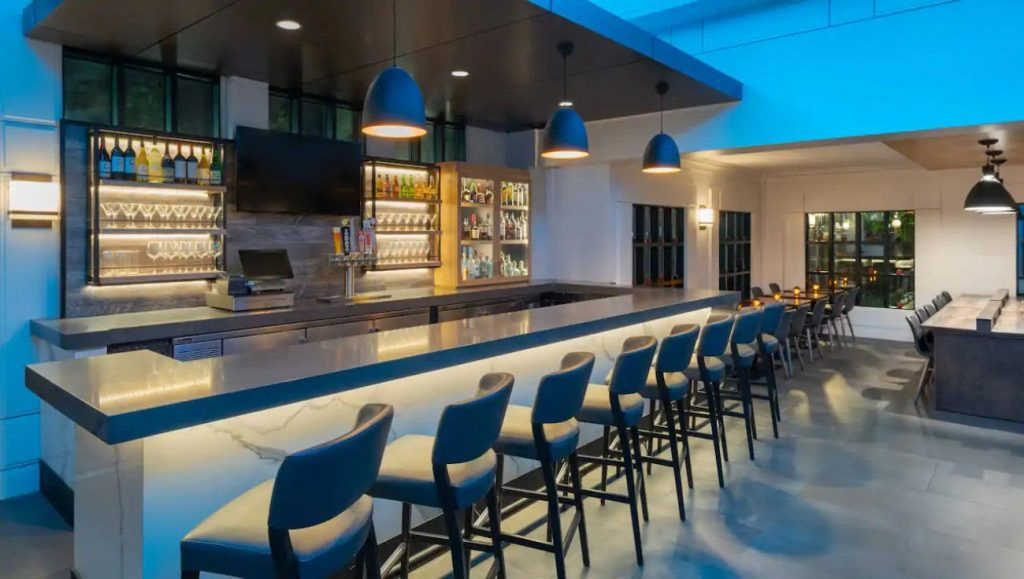
Delivered through a full brand standards review — key count, circulation efficiency, and flag approval carried from concept through opening, with the extended-stay unit mix optimized against the franchise’s operational requirements.
Marriott AC Hotel
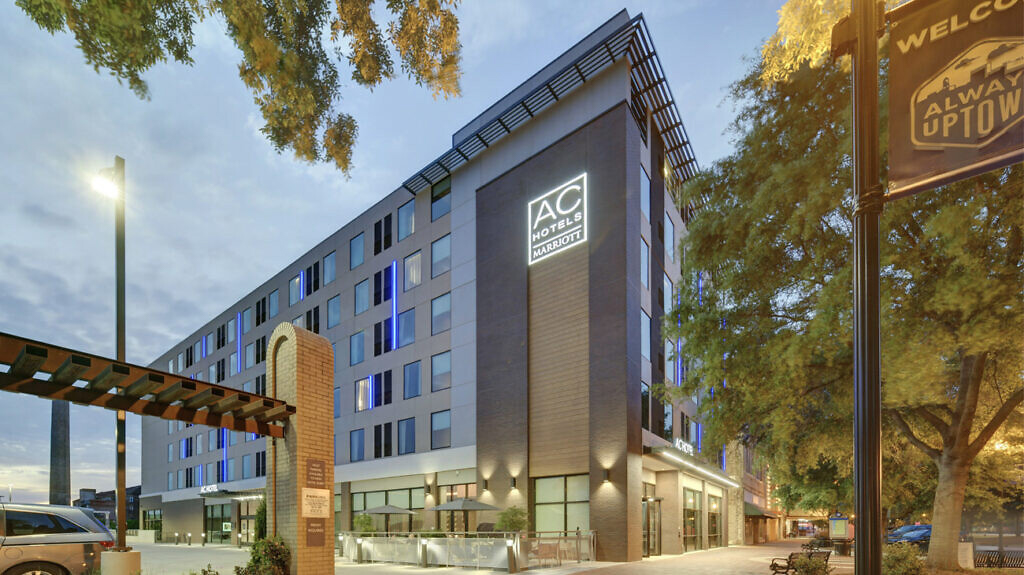
Designed to brand standards from the ground up — guest experience, operational efficiency, and budget conformance carried through concept, entitlement, and delivery to opening day.
Conversions, Flag Changes, and PIPs
Not every hospitality project starts from raw land. Conversions are common where land is constrained, and the early questions are always the same: floor plate depth, structural bay spacing, and whether vertical circulation meets egress and brand requirements. When a property is changing flags or renewing its franchise, we scope and phase the Property Improvement Plan the brand requires — usually so the property can stay operational through the work.
Most PIPs run on a five-to-seven-year cycle as part of the franchise agreement, and the scope is prepared by the brand’s own design and construction team after a physical inspection — guest rooms, public areas, and building exterior are all evaluated against current standards. As HSMAI’s Property Improvement Plan glossary explains, a PIP becomes mandatory the moment a hotel joins a brand system, changes ownership, or comes up for franchise renewal — which is exactly why we scope the likely PIP exposure before a client signs a franchise agreement, not after.
Frequently Asked Questions
What does a hotel architect do?
Designs the building while managing the brand’s standards review, coordinating consultants, and optimizing key count against the pro forma. On branded projects the architect is also the owner’s interface with the franchise reviewer — similar to the owner’s representative role 3rd Act plays on other project types.
How long does hotel design take before construction starts?
Typically nine to eighteen months from programming through permit for a ground-up branded property. Brand approval cycles and entitlement timelines extend that range most often.
What is the difference between a branded and a boutique hotel architect?
Branded work follows a franchise standards manual dictating room dimensions, circulation and finishes. Boutique work has no manual, so every decision is justified independently against operations and revenue. 3rd Act’s branded work includes the Hyatt House and Marriott AC Hotel projects.
Can an existing building be converted into a hotel?
Yes, and conversions are common where land is constrained. The critical early questions are floor plate depth, structural bay spacing, and whether vertical circulation meets egress and brand requirements.
What is a PIP in hotel architecture?
A Property Improvement Plan is the upgrade scope a brand requires at flag change or franchise renewal. Architects scope and phase it so the property can usually stay operational.
Start Your Hospitality Architecture Project
Tell us your flag, key count, and target opening. We’ll tell you what’s realistic.